

An oasis of taste
- Mar 10, 2023
- 5 min read
Michael Caines brings his signature style of modern British cuisine to Cornwall’s coastline.
Words by Hannah Tapping
Starter
White and green asparagus with quail eggs and chervil butter sauce recipe

Serves 4
Ingredients:
8 white asparagus tips
20g butter
Pinch of salt
Pinch of sugar
1 sprig of thyme
Water to cover
8 green asparagus
16 quail eggs
Vegetable oil
Salt and pepper
Chervil, picked
For the chervil butter sauce:
50ml vegetable nage
100g butter
Chervil, chopped
Salt and pepper
Method
Prepare the two types of asparagus; for the white asparagus, peel them to the same thickness and cut then all to the same length. Place into a saucepan and then add the butter, salt, sugar and sprig of thyme. Now cover with water and bring to the boil, simmer until cooked through. Remove from heat and leave to cool within the cooking stock.
The green asparagus should only be peeled if very thick, let’s assume these aren’t, so just pick off the leaves and cut to the same length, it’s important that they are, however, the same thickness. If not, then cook in two separate batches. In boiling salted water, cook the green asparagus on a rolling boil. Once cooked, remove carefully and place into a bowl of iced water.
For the quail eggs:
It’s easier to crack them onto a plate and then into the fryer. Taking a large non-stick pan, rub around some butter and heat lightly, remove from the heat and using a small knife carefully crack the quails eggs into the pan, keeping them separate.
Cook lightly and then remove from the pan onto a tray that’s been oiled or buttered.
Repeat until all are cooked and then take some cling film, oil well and place the oiled surface on top of the quail eggs to keep refrigerated until needed.
For the chervil butter:
Take the vegetable nage and heat, don’t boil, then whisk in the butter and season with salt and pepper. Chop the chervil finely and add to the sauce at the last minute. Reheat the green asparagus in a little water, butter and salt and pepper. Reheat the white asparagus in its cooking liquid. When these are hot, remove the cling film from the quail eggs and place into a preheated oven 180°C/Gas Mark 4 for two to three minutes. Whilst these are warming, drain the asparagus and dress alternatively tip to tail, two white and two green per portion.
Now remove the quails eggs and season with salt and pepper and place three each down through the middle of the asparagus tips.
Add the chopped chervil to the sauce and bring to boil, remove and sauce over the eggs and asparagus tips. Garnish with chervil and serve.
MAIN
Pan-fried monkfish with mussels and a grain mustard tarragon sauce recipe
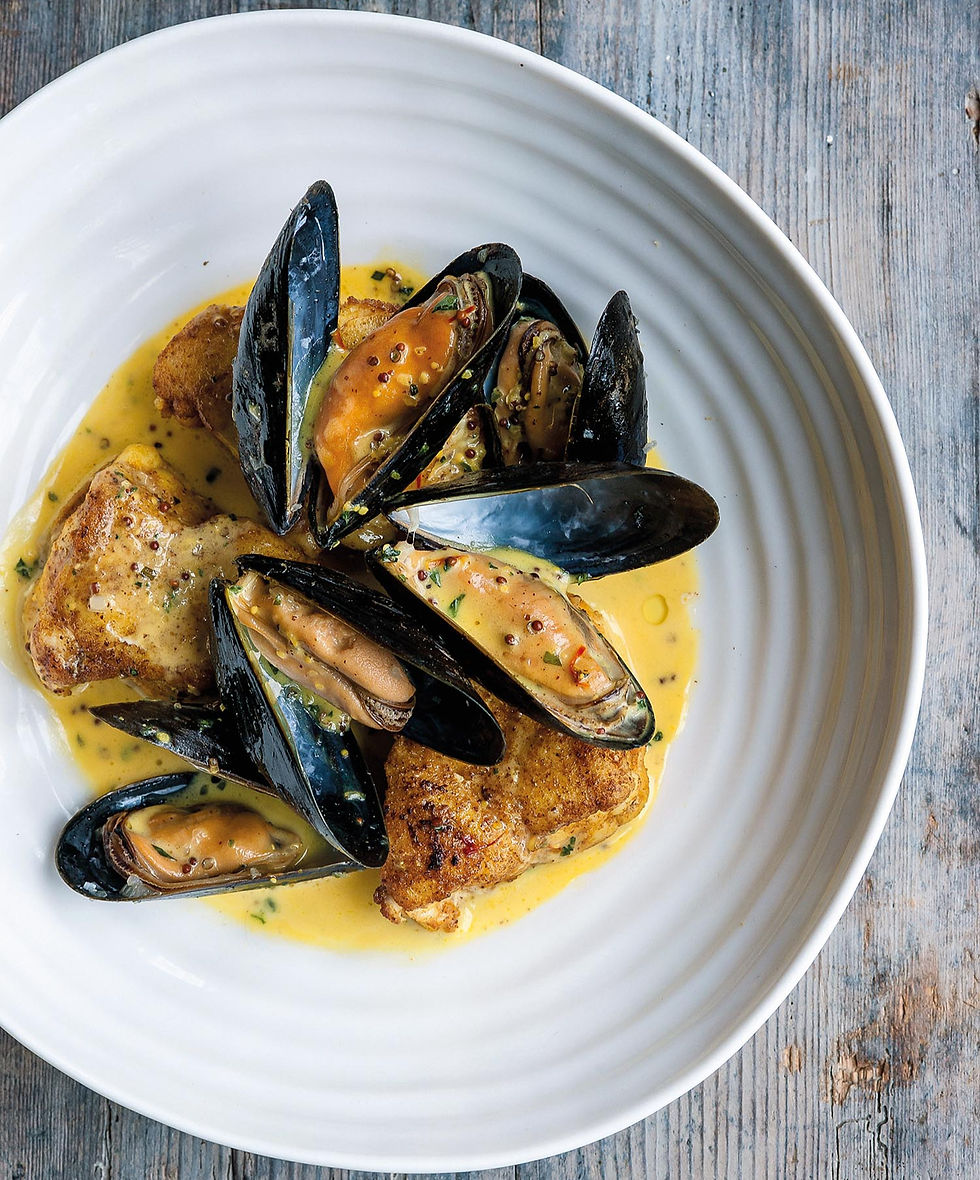
Serves 4
Ingredients:
Monkfish
1 tablespoon curry powder
Salt and freshly ground black pepper
600g monkfish tail, cut into 12 medallions
Olive oil
60g unsalted butter
Juice of one lemon
Mussels
40g shallots, chopped
1 bay leaf
Sprig of fresh thyme
50ml white wine
400g mussels, washed and cleaned
Pinch of saffron
25ml double or whipping cream
500ml fish stock
1 teaspoon grain mustard
Chopped fresh tarragon
Method
Pre-heat the oven to 200°C
For the fish:
Mix the curry powder and one teaspoon of salt together. Season the fish with the curry, salt and a good twist of black pepper. Heat one tablespoon olive oil in a non-stick ovenproof frying pan, then add the fish and 20g of butter. Cook over a medium heat until the fish is golden brown, then turn it over and put the pan into the oven for approximately three minutes. Remove, squeeze over the lemon juice and set aside to rest.
For the mussels:
Wash and clean the mussels. Melt 20g of butter in a large saucepan, then add the shallots and cook out until they are soft and transparent. Add the bay leaf, thyme and tarragon followed by the white wine and bring to the boil, then add cleaned mussels and cover with a lid.
Once the mussels have opened, pour them into a colander over a bowl and leave to drain (discard any mussels that have not opened). Pour the cooking liquid back into the saucepan, add a pinch of saffron strands, the cream and the fish stock. Bring to the boil, then whisk in the remaining butter and simmer until reduced to a creamy consistency. Add a teaspoon of grain mustard, season with salt and pepper and finish with chopped tarragon.
To serve:
Briefly re-heat the monkfish in the oven for a few minutes, then remove and transfer to your serving plates.
Pour the cooked mussels over the top (in or out of the shell, as you wish) and spoon over the sauce.
DESSERT
Caramelised lemon tart with crème Chantilly recipe

Serves 4
Ingredients:
Sweet pastry
250g butter
175g icing sugar
3 eggs
Pinch of salt
Zest of an orange
500g flour
For the lemon cream:
400ml lemon juice
Finely grated zest of half a lemon
12 egg yolks
6 eggs
300g sugar
250g butter
For the Crème Chantilly:
150ml whipping cream
20g icing sugar
Planning ahead:
The pastry must be prepared in advance, wrapped in cling film and refrigerated for at least two hours before using.
Method
For the pastry:
Pre-heath the oven to 160°C.
In a mixing bowl, cream together the butter and the icing sugar until white, using a hand blender or whisk. Add the sieved flour, orange zest and the pinch of salt and bring the mix to a sandy crumble.
Little by little, add the eggs, then bring the mix together on low speed. Once the mix is firm, wrap in clingfilm and refrigerate for at least two hours before using.
Butter the ring and place on to a flat bottomed tray, roll out the pastry evenly and line the tart using a piece of pastry to ensure that the corners are well pressed into the bottom of the ring. Leave the excess overhanging the edge, then line with parchment paper before filling with baking beans to the top.
Bake for 10 minutes in the pre-heated oven and then remove from the oven and using a sharp serrated knife, cut away the top of the excess pastry and then return to the oven and continue to bake for a further 10 minutes. Remove the beans and paper and place back into the oven and cook for a further minute or two to ensure the base is dry. Leave to cool before filling with the hot lemon cream.
For the lemon cream:
Bring the lemon juice and zest to the boil in a saucepan. Cream together the egg yolks, eggs and sugar, add 10ml of the hot lemon juice, whisk together until smooth and then add the remaining lemon juice. Bring back to the boil, whisking all the time until smooth and the eggs are just beginning to thicken and set. Remove from the heat and place into a blender, add the butter progressively and blend until smooth. Pour into the pre-baked tart and leave to set in the fridge.
For the Crème Chantilly:
Sift the icing sugar into the cream and whip to peak. Leave in fridge until needed.
To serve:
Remove the ring from the tart and cut the tart into the required portion size and then dust lightly with icing sugar. Using a blow lamp, caramelise the icing sugar and leave to cool. Spoon on some Crème Chantilly and enjoy.


