Learning Traditional Wisdom
Updated: Apr 29
Words by Jamie Crocker | Images by Joya Berrows
From online fame to land-led living and shared knowledge.

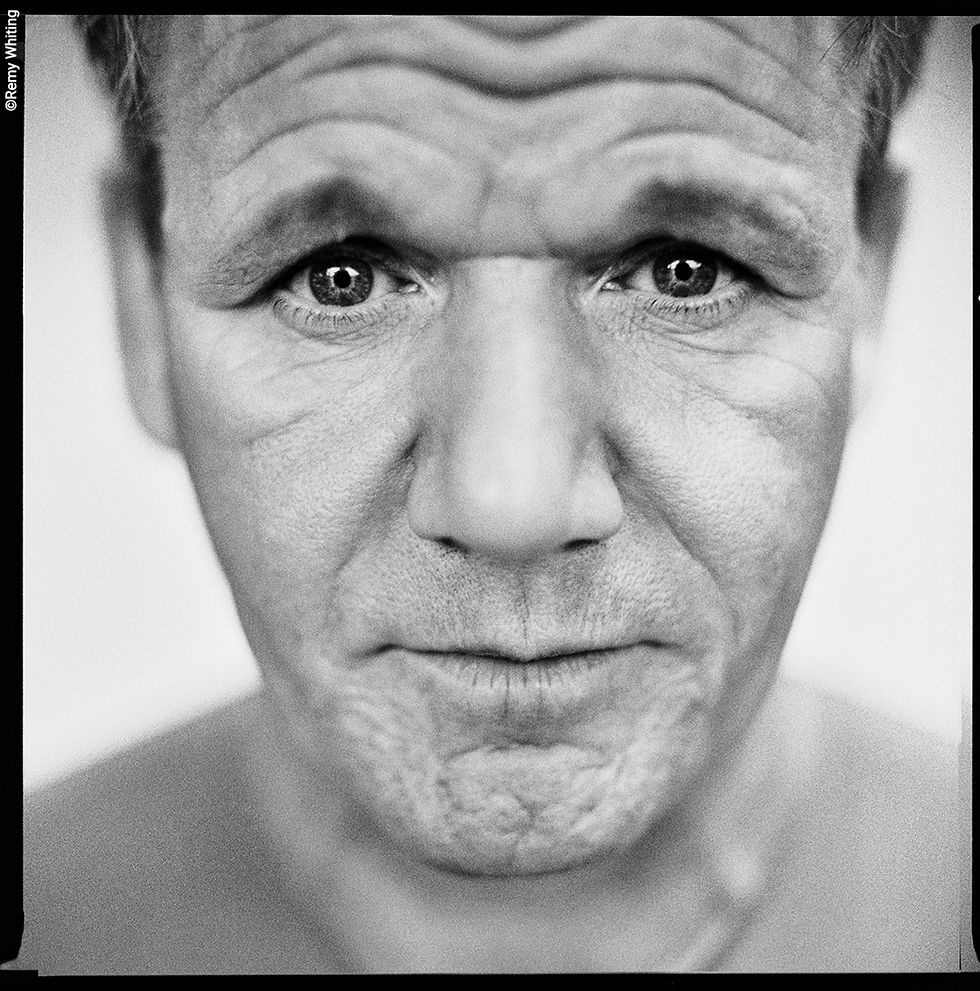
There are worse places to be stranded than Barcelona, though few would choose six hours of enforced reflection between departure boards and another airport coffee. For Jack Harries, it became an apt pause in transit: a moment that mirrors a broader recalibration, one that has taken him from early internet notoriety to a slower, more deliberate engagement with land and learning.

Jack first came to prominence as one half of a YouTube channel launched in 2011, at a time when the notion of an “influencer” had yet to calcify into an industry. What began as light-hearted films made with his twin brother evolved into a travel series and documentary work, amassing millions of followers and placing him at the forefront of the new media landscape. Yet the velocity of that rise, coupled with the demands of constant visibility, prompted a question that would linger: what, precisely, was the point of it all?
That question led him toward environmental storytelling, a shift influenced in part by his upbringing. His mother, an activist, had introduced him early to protest and political engagement. Jack carried that forward into his work, producing films on climate change, attending global conferences and aligning himself with movements such as Extinction Rebellion. For a time, it appeared a natural progression – using reach and influence to address urgent concerns. But the dissonance between message and method proved difficult to ignore. Frequent flying and the mechanics of digital production sat uneasily alongside calls for systemic change.
The turning point was brought about less via a single realisation on the road to Damascus than an osmotic accumulation of observations. Travelling across the UK to document grassroots environmental projects, Jack encountered individuals working at a different scale: a gardener in Totnes cultivating food and community; a renewable energy pioneer in Orkney; those restoring fragments of temperate rainforest. Their work was not performative, seeking adoration, nor presented through screens, but practical and grounded.
From there, the idea of reorienting his own life began to take shape. A flat in London was sold, and a search began – not for a finished bucolic idyll, but for a place that required graft. After more than a year of looking, he found it in Cornwall: an old water mill, long in need of repair, set beside a river and containing the remnants of a defunct hydro turbine. The appeal was immediate, though not romantic. The building demanded work, and the land demanded knowledge. Knowledge that he did not yet possess but was keen to learn.
Moving there full-time, Jack met the limits of his own experience. Tasks as fundamental as growing food or identifying plant species proved unfamiliar. The adjustment was not instant, nor particularly elegant.
It required patience and, crucially, the willingness to learn from others. One such figure was a local postman, Mark, who approached Jack with a practical request to graze horses on the land. What followed was an informal apprenticeship: lessons in animal care, seasonal rhythms and the everyday decisions that underpin rural existence.
This dissemination of knowledge became central to Jack’s thinking. His thoughts blossomed as he began to consider how much of this understanding had slipped from wider circulation, particularly among younger generations raised in urban or digital environments. What startled him was the sheer distance between origin and understanding: where things came from, how they were made, how they worked. It was not just a lack of knowledge, but a lack of experience – not merely that people (himself included) did not know, but that they had never done.
At the same time, he became increasingly interested in the broader context of traditional skills in Britain. Works such as Craftland by James Fox offered a useful frame, documenting the persistence of crafts and the individuals sustaining them. These were not relics, but living practices – blacksmithing, foraging – often carried out beyond the reach of mainstream attention. Their relevance extended beyond nostalgia. In ecological terms, they frequently contributed to biodiversity and landscape management; in social terms, they fostered connection and continuity.
It is from this convergence of influences that Wild Tales has emerged, Jack’s latest venture and one that signals a departure from his earlier work while retaining its communicative intent and channels. The project seeks to connect practitioners of traditional skills, what he terms “wisdom keepers”, with those interested in learning from them. The emphasis is on direct engagement: experiences that take place in fields, workshops and woodlands.
The initial phase, known as the Spring Circle, has taken the form of a six-week online programme, bringing together participants from multiple countries with a small group of speakers. Among them are growers, storytellers and homesteaders, each offering a different perspective on seasonal living and practical knowledge. While the format remains digital for now, Jack is clear that it is a means rather than an end. The longer-term ambition is to establish a platform through which people can book in-person experiences across the UK with weekends spent learning a craft, understanding local ecosystems, or simply participating in forms of work that have tangible outcomes.

There is, inevitably, a tension in building such a platform using the very technologies that many participants are seeking respite from. Jack acknowledges this contradiction without attempting to resolve it neatly. Social media, after all, provided the foundation for his career and continues to play a role in reaching audiences. Yet his own relationship with it has shifted markedly; the applications themselves are absent from his phone, and his engagement is increasingly strategic rather than habitual.
This ambivalence reflects a wider sentiment. Among those involved in Wild Tales, there is a recurring articulation of disconnection, both from the natural world and from each other. It is not framed in abstract terms, but in the specifics of daily life: time spent indoors, interactions mediated through devices, a lack of familiarity with the processes that sustain basic needs. The response, in this context, is not ideological but practical. Learning to grow vegetables, to build with natural materials, or to recognise bird calls becomes a way of re-establishing contact.

Cornwall, where Jack is now based, provides both a backdrop and a point of reference. The county’s landscape, shaped by centuries of human activity, offers numerous examples of the interplay between tradition and adaptation. It is also a place where questions of belonging and identity carry particular weight. Jack is conscious of his position as an incomer, and of the need to approach his project with sensitivity to local context.
The history of the mill itself reinforces this perspective. Originally renovated in the 1960s by a previous owner, who documented the experience in a published account, it stands as a reminder that each generation inherits both structures and decisions. The presence of the old turbine, once part of a system of renewable energy before the widespread adoption of fossil fuels, adds another layer. It suggests that the technologies often framed as new may, in fact, be rediscoveries.
Discussions around land use and environmental impact are never straightforward. Even the water mills that once powered rural economies have been implicated in ecological disruption, particularly in relation to river systems and fish migration. Jack does not seek to simplify these complexities. Instead, his approach aligns with a broader effort to draw selectively from the past, retaining practices that remain beneficial while recognising their limitations.
In this, there is a parallel with institutions such as the Eden Project, where contemporary environmental initiatives are informed by both scientific research and historical understanding. The challenge lies in integrating these strands without resorting to either idealisation or complete dismissal.
For Jack, the task is ongoing. Wild Tales is still in its early stages, and its ultimate form remains open. What is clear, however, is the direction of travel: away from abstraction and towards application; away from scale for its own sake and towards specificity. It is a shift that mirrors his own trajectory, from documenting experiences to actually inhabiting them.
Back in Barcelona, the delay eventually resolves itself, as such things tend to do. A flight is boarded, a journey resumed. Yet the pause lingers in the telling, as a reminder that movement, in all its forms, benefits from interruption now and then. A necessary inconvenience to learn from.