

Oak frame craft
Words by Jamie Crocker
Two Cornish businesses collaborated to shape Halwyn’s restaurant.
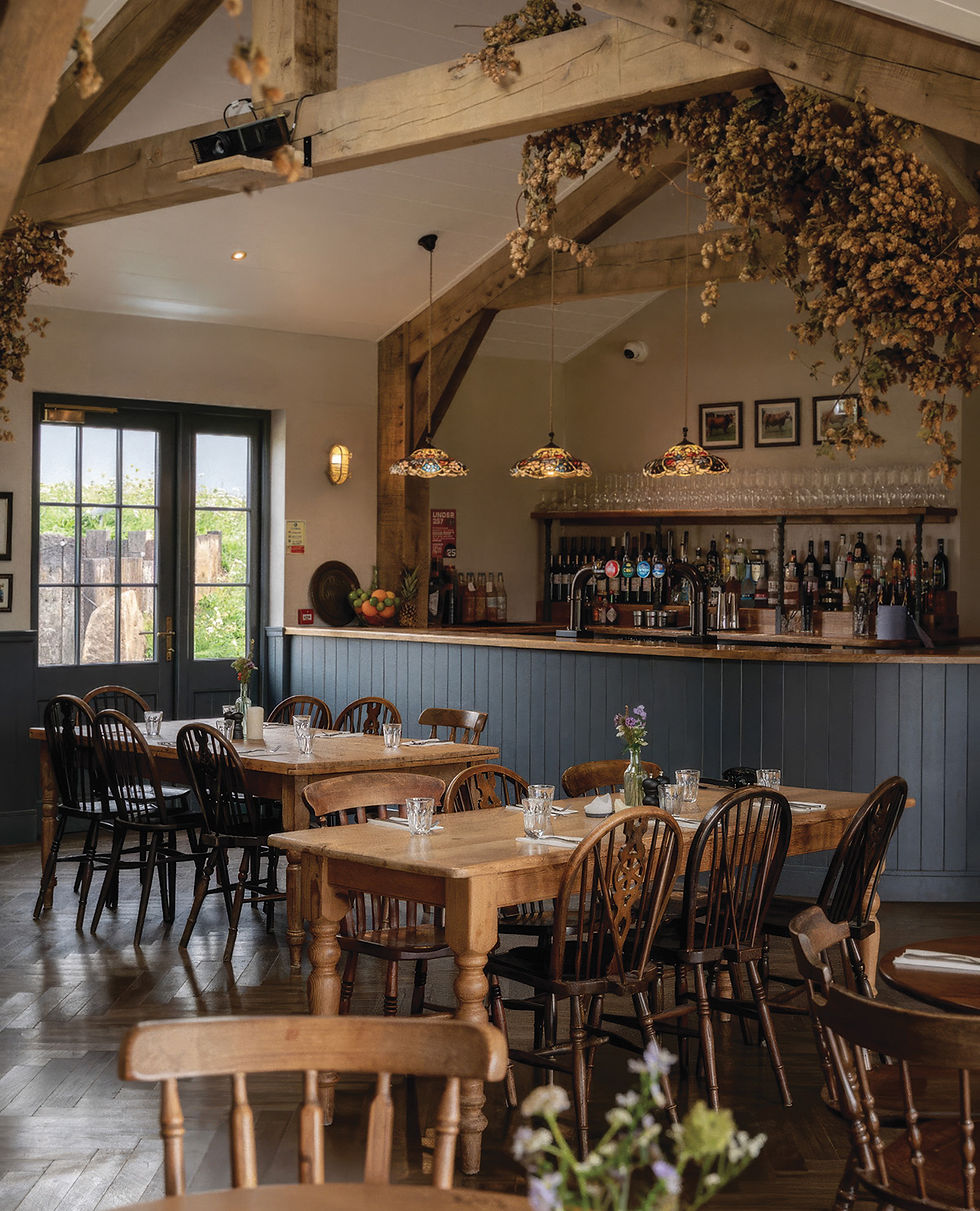
On the edge of Crantock, a new purpose-built structure houses the latest venture of the Eustice family, combining dining, recreation and community in a single space. It is the culmination of decades of local farming history and the vision of Will Eustice, a fourth-generation custodian of Trevowah Farm. The restaurant and bar building, now open to the public, exemplifies how local expertise and careful collaboration can produce architecture that is both functional and characterful. Central to that achievement is the oak frame, designed and installed by Cornwall-based Post & Beam, whose team worked alongside Will from the earliest design sketches to the final crane lift on site.
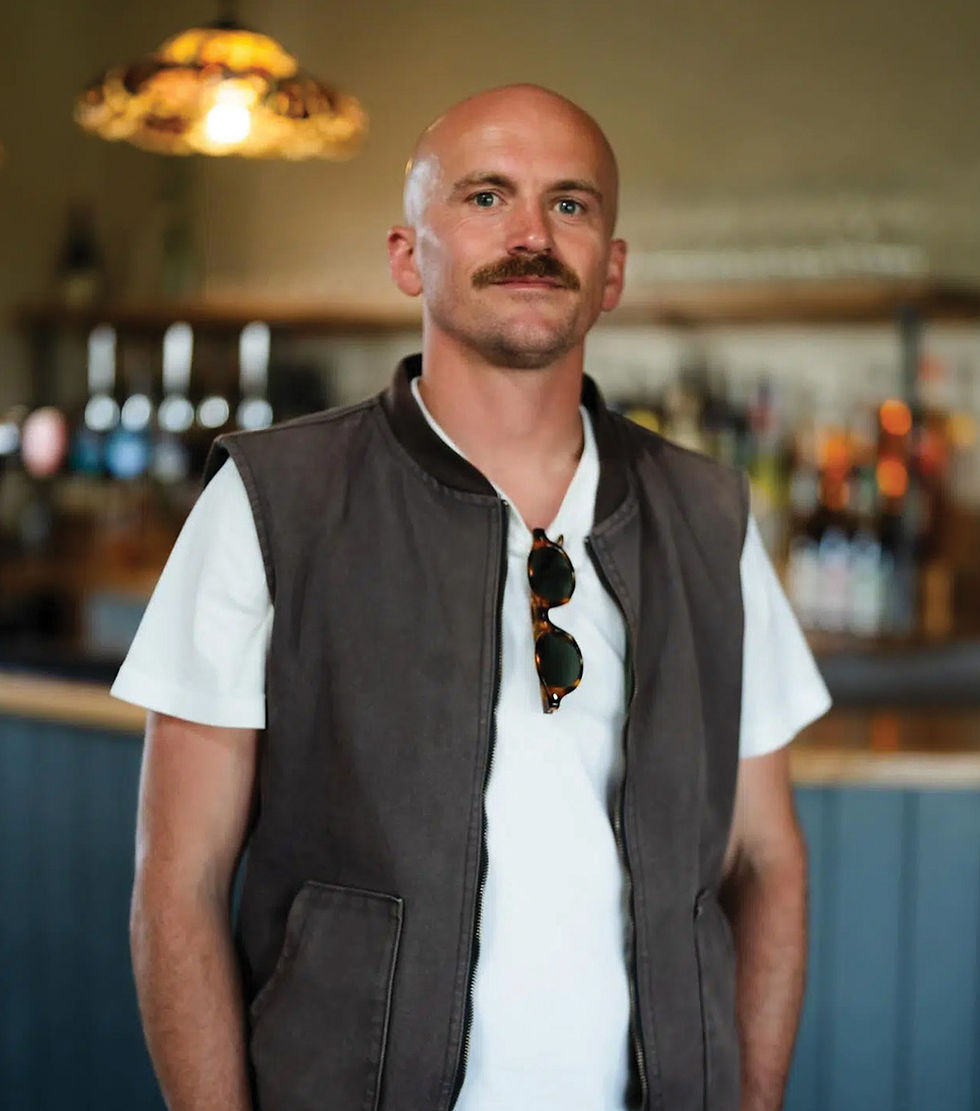
The origins of Halwyn are rooted firmly in the land. Trevowah Farm was purchased in 1944 by Will’s great-grandfather, Captain Jack, and farmed by five successive generations of the Eustice family. Over the years, the farm adapted to the challenges of local agriculture, from dairy ambitions to beef and vegetable production. That same ability to adapt and operate within the realms of a community-based ethos informs Halwyn today, making it a space for social connection and local enterprise. While mini-golf provides one draw, the main focus remains on food, drink and the sense of gathering. It is precisely this dual purpose, activity and hospitality that shaped the architectural requirements of the new building.
Will’s approach to Halwyn was hands-on. Having spent nearly a decade in London and time in Vancouver, he returned to Cornwall with an understanding of design and project management that is unusual in a client. He engaged Post & Beam not simply as contractors, but as design partners. The collaboration began with discussions in their workshop, followed by a tour of some of the company’s past projects, including the Tremenheere Sculpture Gardens. There, over coffee in the café, ideas took shape, informed by the lessons of previous commercial timber buildings. The project demanded a balance between structural integrity, aesthetic presence, and a welcoming atmosphere, criteria that guided every conversation and decision.
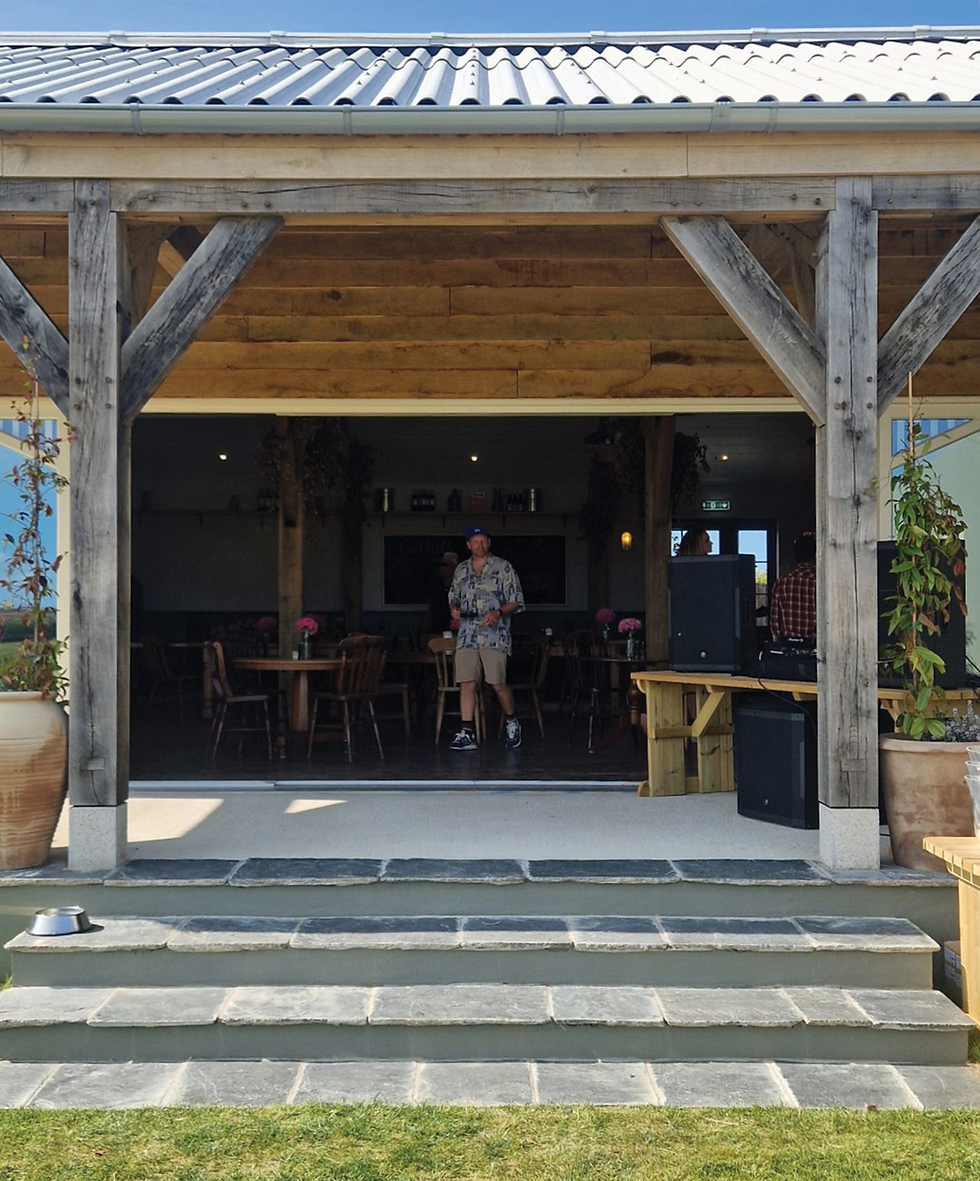
For Post & Beam, the oak frame, as always, was the defining element. “Will wanted the oak incorporated to give the building a special, welcoming and warm feel as well as an instant sense of age,” explains Tom from Post & Beam. In a hospitality setting, a frame of this nature does more than hold up a roof; it sets a tone, creating a sense of permanence and care that visitors can feel immediately. Structurally, oak provides durability and resilience, essential in a coastal environment where buildings must endure variable weather. Visually, the exposed beams and carefully crafted joints give the interior a feeling that reaches down into something primaeval in all of us, one that few other materials can match.
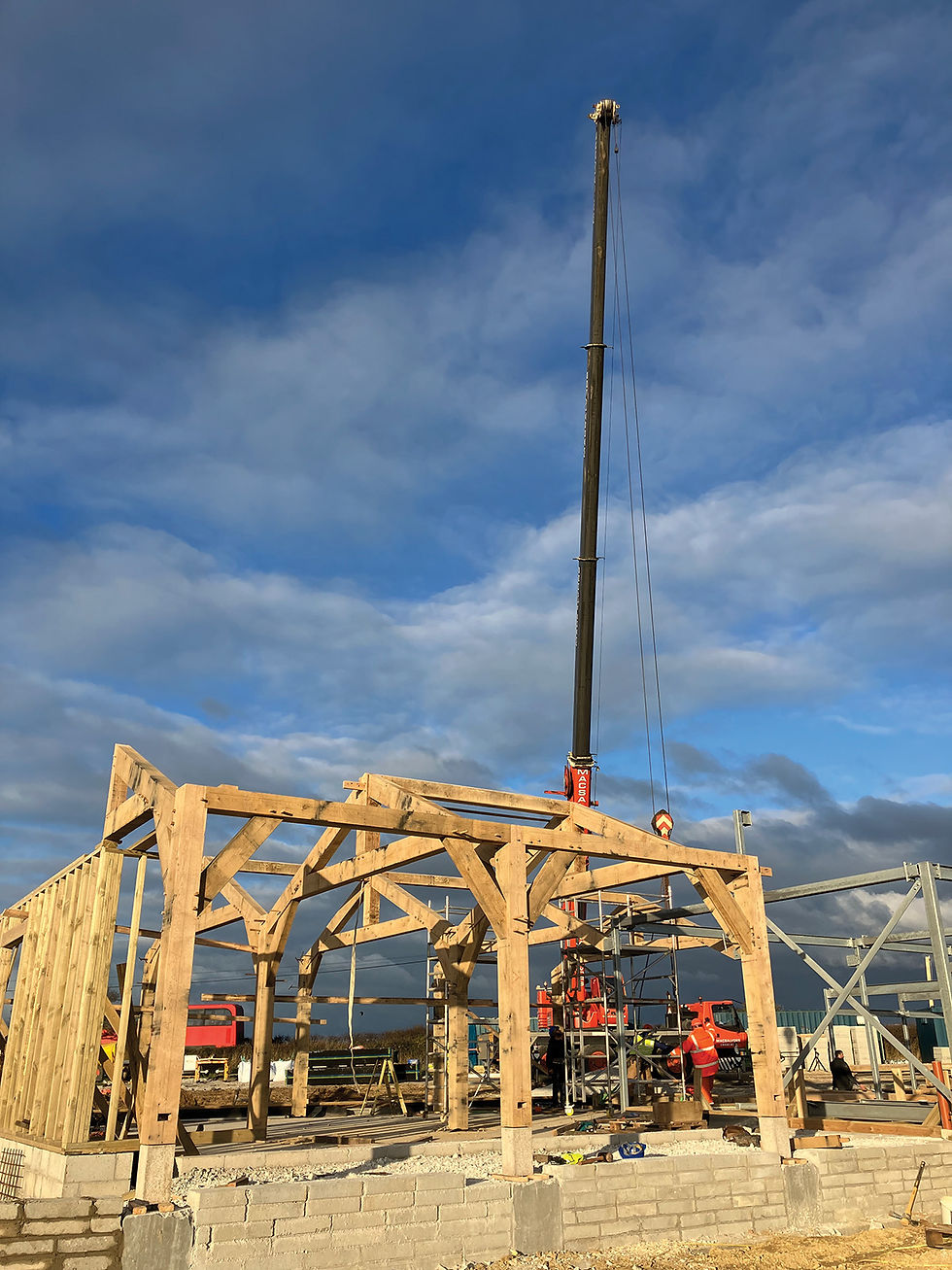
The fabrication process is exacting. Each timber, sometimes weighing half a tonne, was selected, graded and laid out in two-dimensional orientation on the workshop floor. For Halwyn, the team invested three to four weeks preparing the frame before it was transported to Crantock, where a crane was required to raise the structure over three days with a team of four carpenters. During this phase, Will remained closely involved, visiting the workshop to review joint details and finishes. Decisions about reclaimed timber, joint types, and finishing were discussed and tested, a process that demanded both patience and mutual respect between client and craftsmen.
Collaboration was central throughout the build. Will’s dual role as client and project manager was unusual, but it allowed for a fluid exchange of ideas and decisions on-site, which aided the whole process. He maintained the vision for the building while also seeking input from Post & Beam and structural engineers, creating a dynamic in which expertise was acknowledged without compromising intent. Practical considerations sometimes required adjustment, as with a proposed use of reclaimed timber from a Dutch mill, which was ultimately set aside due to structural and cost implications. These decisions were part of a two-way conversation, reflecting the professionalism and experience both parties brought to the project.
Also integral to the project was Josh Little and his company Roseland Restoration, the main contractors who worked seamlessly with Will and Post & Beam to deliver the project on time. Overseeing the whole exercise they worked tirelessly on-site going above and beyond to make it a success.
Halwyn owner Tom on site of Post & Beam's Construction
Halwyn also represents a moment of local collaboration. Both Will and Post & Beam are Cornish businesses, and their partnership underscores the capacity of the region’s skilled trades and design professionals to execute complex commercial projects. Post & Beam, whose portfolio includes residential and commercial commissions across Cornwall, notes that local projects hold particular significance. “We take pride in seeing our work on show in commercial buildings where the public can enjoy the space,” says Tom. Halwyn is now part of that ongoing story, contributing to the identity of the area while serving a practical purpose.
The finished building reflects this careful planning and shared effort. Its oak frame is immediately apparent on entering, lending an impression of solidity without ostentation. The interiors balance openness and intimacy, accommodating the demands of a busy restaurant and bar while maintaining a connection to the surrounding landscape. The craftsmanship speaks to the technical skill of the team, yet it also communicates something subtler: the value of design that is grounded in understanding, collaboration and local knowledge.
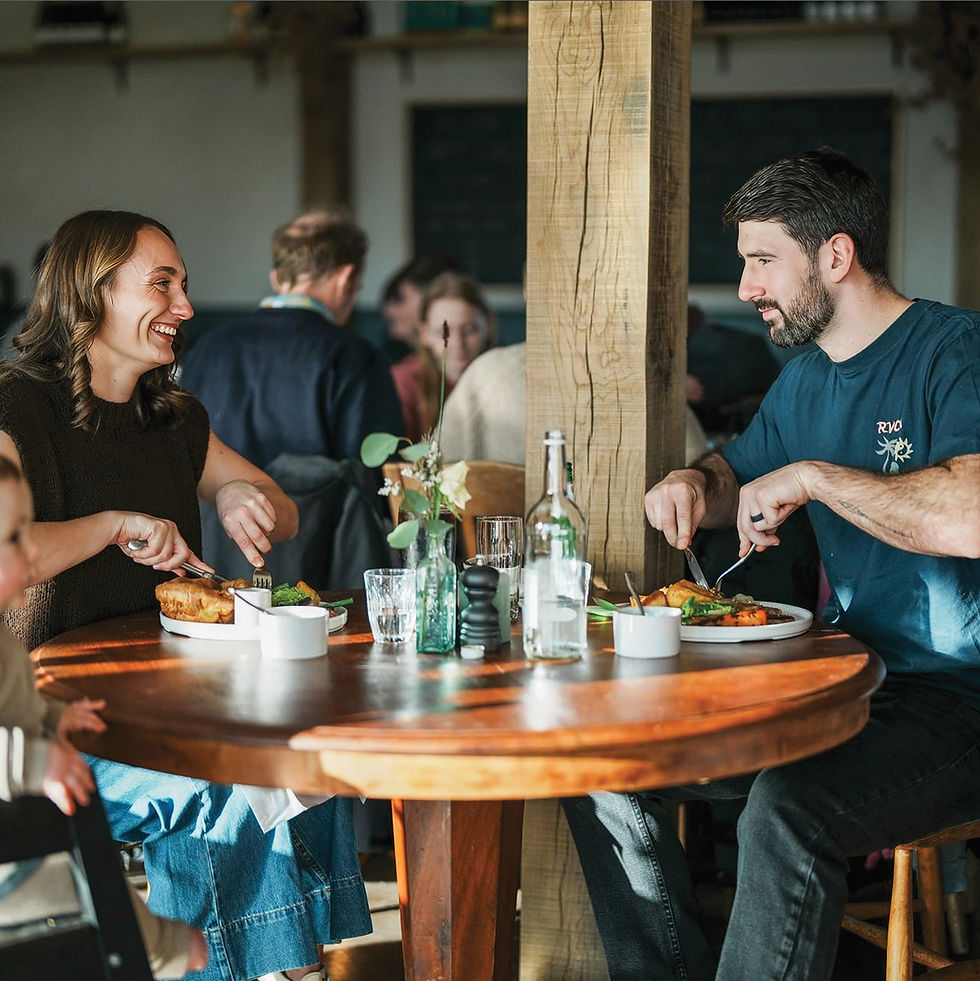
Halwyn transcends the sum of its parts – the architecture, the furnishings, the curated experience, and the layers of family history that shape it. Under Will’s meticulous direction, every detail feels deliberate with nothing left to the vagaries of chance. Branding, interior layout, and architectural decisions were considered collectively, producing a space that is coherent and confident. The oak frame, while central, is part of a broader expression of identity, one that honours the farm’s lineage while presenting a contemporary, functional destination.
Halwyn now operates as a hub for both locals and visitors, with food, drink and activities arranged to encourage interaction and enjoyment. The oak frame structure acts as a testament to what can be achieved when local knowledge and specialist skills converge. It is an outcome that resonates beyond the immediate function of the building; it is a marker of capability within Cornwall itself, demonstrating that commercial projects can combine craft and design aligned with community needs.
For Post & Beam, Halwyn joins a body of work that includes some of Cornwall’s most recognised timber buildings, from galleries to residential projects. Yet this commission stands out for its intensity of collaboration, the client’s engagement and the opportunity to shape a space that will see daily public use.
It is, in many ways, a culmination of years of experience applied in a highly visible context. The firm’s involvement has ensured that the oak frame is not merely decorative but central to the building’s structure, atmosphere and identity. It is a statement piece, not only for the Eustice family but for the broader community of local designers, engineers and craftspeople. In a single structure, it celebrates heritage, precision, and a willingness to invest thought and energy in creating something of enduring value. In that sense, the success of Halwyn is measured not only in its architectural achievement but in the way it draws people together, supports local skills, and reinforces the region’s identity as a place capable of delivering ambitious, high-quality destinations.


