

Taking Inspiration
Words by Jo Jakeman
How Cornwall’s landscape is shaping a new generation of literature.

You could say that Daphne du Maurier is responsible for my desire to write books set in Cornwall. I read Rebecca when I was a landlocked twelve-year-old with an overactive imagination and I’ve been dreaming of Manderley ever since.
Jamaica Inn, Frenchman’s Creek… the beauty and the ruggedness of du Maurier’s landscape were catnip to a day-dreaming teen such as myself. Though I have lived all over the country, Cornwall is the first place that has stuck. Maybe it’s because of my Cornish husband, or my adoration of Daphne Du Maurier, but moving here felt like coming home. My children have grown up here, my family are here and, if there is a geographical equivalent of a soulmate, Cornwall is it.

I am among good company when it comes to writers who live in Cornwall or who set their books against this backdrop, but I am particularly interested in the popularity of mysteries set here and why. Cornwall provides a rich source of inspiration for art, films and literature and it has led to a wealth of creativity. There are book festivals, film festivals and galleries aplenty. But why?
To me, location should always be a conscious decision for any writer. I love it when the setting has a significant role in the book and isn’t just an afterthought. There are many great stories that could be set in Hull or Halifax, Derby or Dover, and we would be none the wiser if the location changed overnight. However, I like to think of the location as an arena in which the story unfolds, bringing both limitations and opportunities due to its unique setting. When it comes to Cornwall, those locations are often wild, windswept and ready to be cut off in bad weather - LJ Ross’s The Cove and Alice Feeney’s Daisy Darker have both had characters cut off by high tides. The remote areas of Cornwall and the limited numbers in the police force mean you could be waiting a while for help. And don’t get me started on patchy mobile-phone signals, fast-changing weather, and a rich history of folk tales and superstitions – all of which are gifts to a writer, especially a crime writer who wants to keep their protagonist isolated for as long as possible.
Cornwall is, at times, remote and rugged, at other times picturesque and quaint. There is a rich seam of settings and stories in this county that make it easy to set books here. There is no end of inspiration because it’s difficult to ignore the landscape. I take every opportunity to get out and about, exploring the coastal paths and coves. A writer’s mind often sees the accident waiting to happen before they see a pretty spot to swim. Being aware of tidal times means being aware of how they can catch people off guard. To have knowledge of the mines and engine houses that cast a lattice of underground tunnels is to know how easy it would be to get lost in one.
My most recent novel, The Vanishing Act, was inspired by the numerous engine houses littering the countryside around here. They speak to a different time, when life was harder, when communities were forged in sweat. Yet there is something almost romantic about the ruins. I love seeing ones that people have sympathetically renovated and turned into homes. But even then, there’s an awareness of the dangers the landscape can offer.

There is also such natural beauty that I find myself marvelling at the way the setting sun illuminates the water, and in awe of the quiet strength of the wild ponies on Bodmin Moor. I pay more attention to each falling leaf and bird in flight than I ever have. I have taken numerous photographs of the sea on a sunny day, telling anyone passing that we could well be in the Mediterranean. I am in awe of the beauty of Cornwall and can’t help but be inspired by it – knowing I want to get its beauty on the page, yet accepting I’ll never do it justice.
Many authors unravel difficult plot points, develop characters, and solve mysteries while walking the creeks and coasts of Cornwall, but it’s rare that I consciously think of my novels when walking. I try to be present and immerse myself in the moment, simply getting out in nature to press the reset button. There’s something refreshing about swimming in the sea here and I’m not just talking about the temperature. I don’t know whether it’s the rush of endorphins from the cold water or the act of overcoming those voices that are telling me to get back in the car, but I always feel invigorated and powerful after a dip in the ocean and ready to get back to work. Indulging in a post-swim hot chocolate can lead to me overhearing a phrase I want to use, or a mannerism that reminds me of one of my characters so I’m never ‘off-duty’. Sometimes, the very act of not puzzling out aspects of my book means they solve themselves when I’m not pushing for answers. My subconscious is a stubborn beast at times.
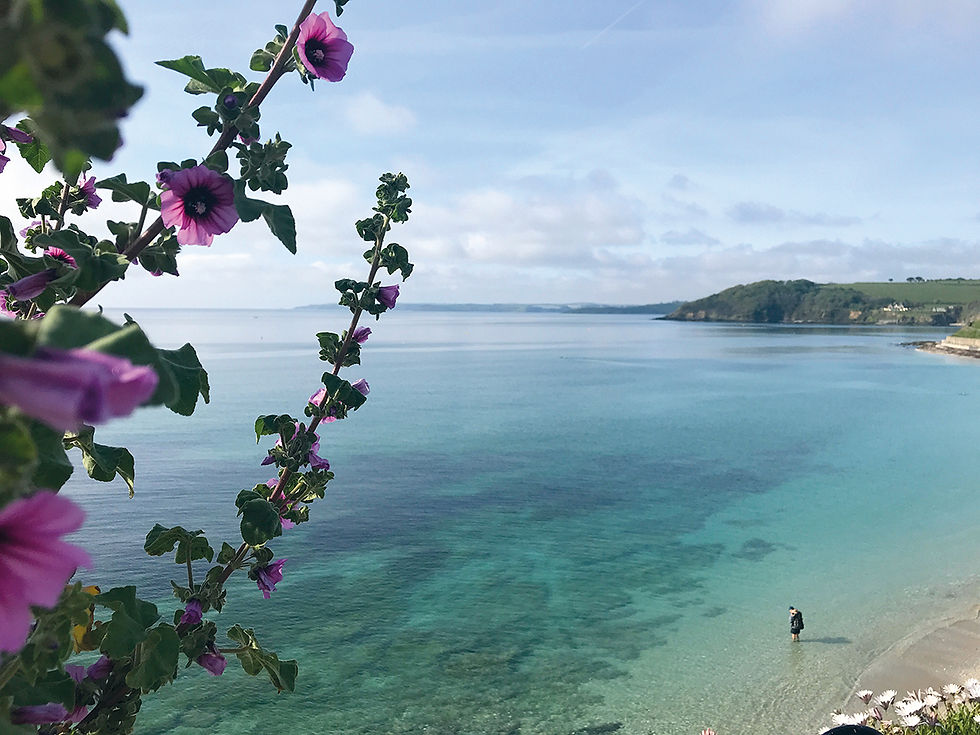
I can’t say that I’ll never set a book elsewhere, but for now, each idea I’m working on has roots in Cornwall. There are authors who travel to far-flung lands to immerse themselves in the culture, but I still have so much to explore and learn about Cornwall. When there is such a richness of stories and people on your doorstep, why go elsewhere? If there is a better place than Cornwall to spend your time daydreaming, then I haven’t found it. I never tire of writing or reading about Cornwall and, thankfully, I don’t have to.
The Vanishing Act by Jo Jakeman (Constable, £21.99) is available from all good bookstores.


