A farm to stay
Words by Jamie Crocker
A Cornish farm stay where families and animals share space.
There are holiday cottages that provide a place to sleep and there are places that become part of the holiday itself. Old Lanwarnick belongs to the latter category. Set across 34 acres near Duloe, the working farm combines six self-catering cottages with three glamping capsules, giving families, couples, friends and their dogs plenty of reason to spend time on the property instead of treating it as a base they leave each morning. The site has evolved around the idea that a stay can include a proper encounter with the countryside, with alpacas at its centre and woodland, fields and farm animals providing the setting. The result is a holiday business with a distinctly practical understanding of what families actually need.
Animals are central to that experience. Old Lanwarnick breeds alpacas and offers trekking across its grounds, beginning with an introduction to the animals and a short demonstration before guests head along woodland paths and into the fields. The experience lasts around two hours, with the trek itself usually taking about an hour, and children can take part, subject to the requirement that under-12s share an alpaca with an adult. Afterwards, there is time to meet the pygmy goats, rescue ducks and chickens, and possibly some of the alpaca youngsters. The current trekking experience costs £25 per person when each has an alpaca, or £35 for two people sharing one.
That relationship with animals runs through the wider site. Dogs are welcomed throughout the accommodation, with secure exercise fields giving them space to run, while walking routes lead around the alpaca fields and through the woodland. There is dog agility, a woodland walk and practical facilities intended to make bringing a pet straightforward. The cottages also provide dog welcome packs, with towels, blankets, bowls and treats, while spare beds, crates and leads are available on request. Families with younger children receive a similar level of thought, with travel cots, high chairs, bed guards, stair gates and other essentials available.
For children, the attraction is that the farm gives them somewhere to go without requiring a car journey. There is a den-building area, a fairy trail and outdoor games, while the board-game and puzzle library gives families an option when the weather turns. Children can occupy themselves outside, dogs can exercise, and adults can have a little more breathing space without organising an excursion every few hours. The farm becomes part of the itinerary whilst the cottages offer a place to relax and kick back.
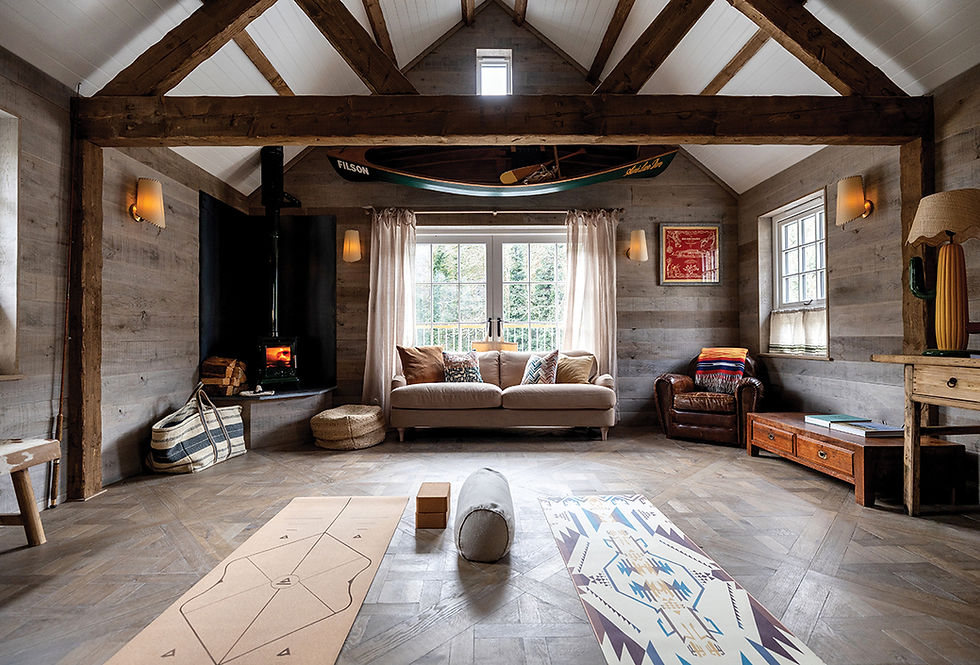
Beginning with Blackberry Barn, which is among the most popular choices for smaller families and groups, it has a king-size bedroom and a twin, with vaulted ceilings, full-height windows and a south-facing courtyard garden. Its private outdoor space and nearby shared hot tub give it a strong appeal for families who want somewhere comfortable to return to after a day out.
Hob Nob takes the idea of a gathering further. Formerly the home of the old cider press, it has a first-floor living area with high vaulted ceilings and countryside views. Three bedrooms can accommodate up to six guests, while three bathrooms make it suitable for families or groups who prefer to have their own space within a shared holiday house. The large kitchen and dining area are made for communal meals, with room for eight around the table, and there is a private garden, hot tub, barbecue and access to the wider facilities.
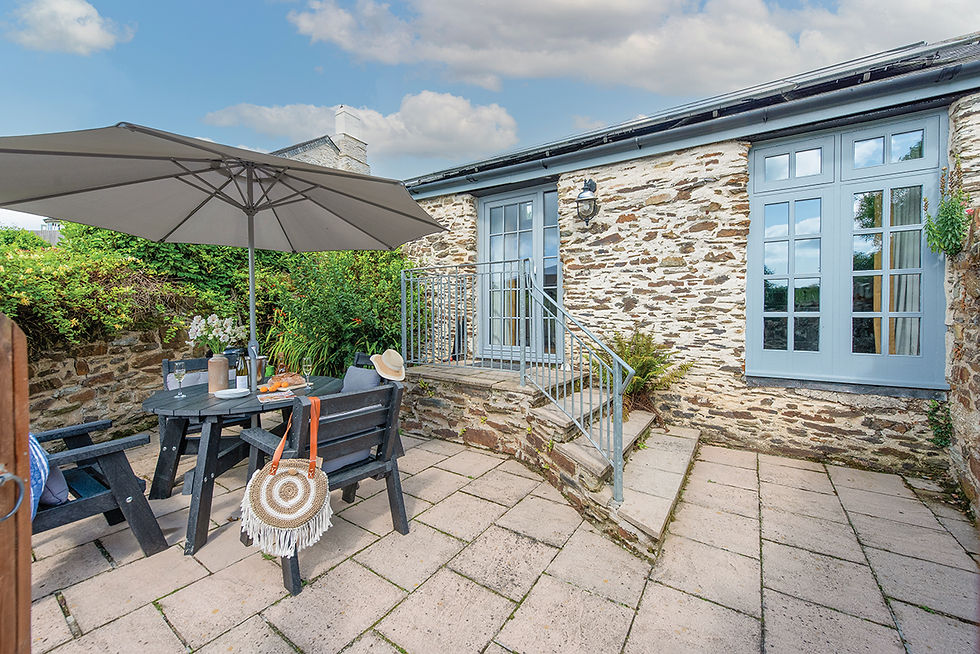
Honey Pot is the smallest of the cottages, sleeping two in a king-size bedroom. Its wood burner, private patio and views across the valley make it a natural choice for couples, while its dog-friendly arrangements mean a weekend away does not have to involve leaving a much-loved companion behind.
Spice Barn, proudly awarded the prestigious Visit England ROSE award (Recognition Of Service Excellence), also sleeps two and occupies a former agricultural building whose high ceilings now give its upper-floor living space a generous feel. The private patio, jacuzzi bath and access to the site’s hot tub and gym add the comforts expected from a luxury stay.
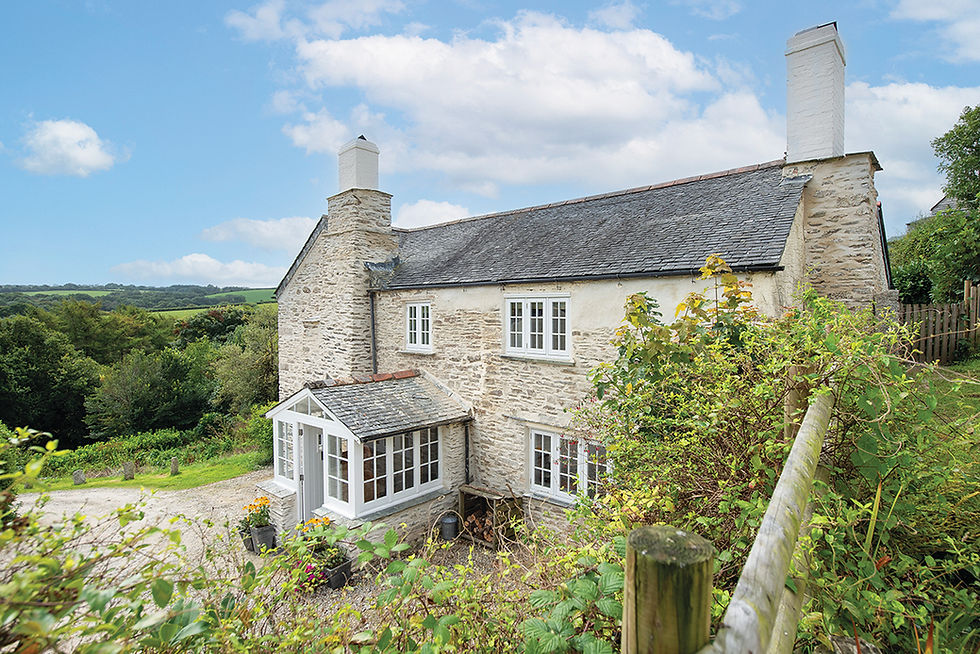
Rainbow Cottage sits between the smaller retreats and the larger group accommodation, sleeping three across a king-size bedroom and a single room. Its previous life as the farm’s stables remains part of its character, while a Juliet balcony in the living room takes advantage of its position on the south-facing slope. The views extend across the gardens and woodland, and a walled garden provides a private outdoor area. At the top end is The Old Farmhouse, a Grade II-listed property sleeping eight across four bedrooms. Its history is unusually tangible: part of the building is recorded in the Domesday Book, while the rest dates from the seventeenth century.

Original details include vaulted bedroom ceilings, flagstones and a clome oven in what is now the dining room. Modern additions include a fully fitted kitchen, underfloor heating beneath the original flagstone floor and walk-in showers, allowing the building’s history to remain visible without turning a family holiday into an exercise in historical reconstruction. A private hot tub completes the picture.
The farmhouse also illustrates the way Old Lanwarnick handles larger groups. Multiple cottages can be booked together, while the whole site is advertised for groups of up to 37 people. That creates an unusual degree of flexibility for extended families or groups of friends: people can spend time together when they choose, while individual households still retain their own accommodation.
The three glamping capsules, Swallow, Buzzard and Wagtail, extend the same approach to guests who want a closer connection with the outdoors. Each sleeps up to four, with a king-size bed and sofa bed, while toddler mattresses and travel cots can be requested. A handy two-ring hob indoors and a BBQ outdoors provide all the comforts required for a more substantial stay and they also have use of the site’s communal fire pit located nearby.
Across the accommodation, the detail is in the practical provision. Guests receive a welcome hamper containing eggs from the farm’s hens, alongside milk, butter, bread and cake sourced nearby. The cottages have kitchens equipped for proper self-catering, with dishwashers, washer-dryers and, in some cases, utility rooms. Egyptian cotton bedding, bathrobes, Wi-Fi and Smart TVs sit alongside baby equipment and dog supplies. There are also three electric-vehicle charging points and bike storage on site. Together, they answer many of the practical problems that can turn a family holiday into a logistical exercise.
The same thinking extends to the site’s environmental approach. Old Lanwarnick has installed solar panels, uses eco-friendly cleaning products and is working to enhance local biodiversity. Logs supplied for cottages with wood burners are harvested on site from fallen trees or trees removed as part of woodland management. Compostable bags, recycled-paper kitchen roll and refillable bathroom products form part of the wider provision for which the business has received recognition through Green Tourism with a silver award.

At Old Lanwarnick, guests encounter those choices in the kitchen, beside the wood burner and in the way the woodland is managed. They are asked to recycle during their stay, while restrictions on candles, paper lanterns and drones reflect the practical demands of running a holiday business around livestock.
Yet the property has not been designed to keep guests on site at all costs. The coast is close enough for a day at the beach, while Looe, Polperro and Fowey are all within roughly half an hour’s drive. The site itself as around 15 minutes from the sea, making the farm a useful starting point for exploring south-east Cornwall as well as a destination in its own right.
Old Lanwarnick’s character comes from how these elements overlap. A child can build a den, meet an alpaca and then return to a cottage with underfloor heating. A dog can run in a secure field before settling beside a wood burner. A couple can spend the morning walking the farm and the afternoon exploring the coast before returning to a hot tub. The comforts are considerable, but the setting keeps pulling people outdoors.
Old farm structures and stables have been converted into accommodation, retaining features such as flagstone floors and vaulted ceilings. The approach avoids turning the past into decoration for its own sake. A former cider press becomes part of Hob Nob; old stables become Rainbow Cottage; the farmhouse continues to reveal evidence of its agricultural history. The buildings remain legible as former working spaces while accommodating the expectations of contemporary holidaymakers.
For Vicky and the team behind Old Lanwarnick, the farm is consequently more than a collection of holiday units. Its appeal depends on the interaction between accommodation, animals and land, with each part giving the others a reason to exist. For a business built around holidays, that may be the most persuasive idea of all: giving people the freedom to decide what their day looks like once they arrive.