

Rooted in renewal
Words by Jamie Crocker
Àclèaf is a MICHELIN-Starred and 4 AA Rosette restaurant in Devon.

Situated within the five-star Boringdon Hall Hotel and Spa, near Plymouth in Devon, it is presided over by acclaimed Head Chef Scott Paton. It offers an unforgettable gastronomic journey built around seasonally inspired, locally sourced ingredients. Since first being awarded a MICHELIN Star in 2023, Àclèaf has retained its MICHELIN status each consecutive year, establishing itself as a cornerstone of the South West’s fine dining scene. Guests can enjoy a signature four-course menu or seven-course tasting menu, where exceptional flavours aligned with artistic presentation take centre stage. We delve deeper with Scott.
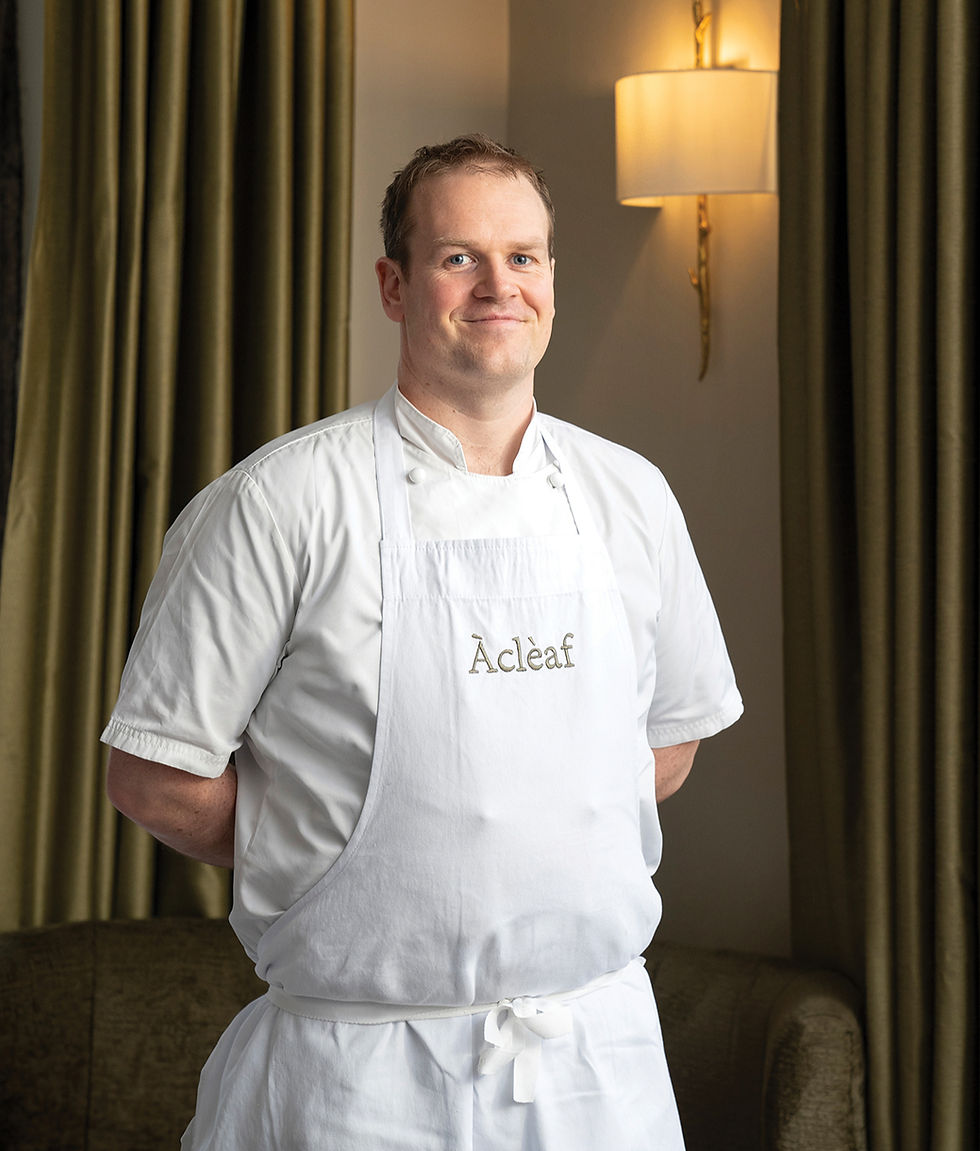
Àclèaf holds a MICHELIN Star. How would you describe the ethos in the kitchen, and how has it evolved under your current leadership?
Our style is “truth with elegance”: the best produce we can get, cooked honestly and served with refinement. We have taken this philosophy into the dining room, re-evaluating everything from the décor to table presentation.
Our elegance must be transmitted through every angle, and table settings are key to that; we want minimal. We stripped back any unnecessary items to ensure guests felt at ease, had space and were comfortable whilst dining. All the senses must play in harmony with one another to help guests relax so they can fully immerse themselves in the experience.
People will always remember how you made them feel. Guest experience is at the centre of what we do and we want to use food and drink to complement that. In the kitchen, culture matters: collaboration, ownership and pride. Creatively, there are no boundaries, but we’re clear on our identity. I’d like to think you could recognise an Àclèaf dish in a photo.
The chefs in Àclèaf are all trained in the classics, but I’m not one to let rules get in the way of creativity and I make sure that the kitchen is an environment where the team comes together to share ideas without the fear of rejection or failure. We learn together and make mistakes together. We talk everything through as a team and come up with new ideas together. Everything is questioned, the dish is stripped back to individual ingredients, to then find a clear purpose.
The journey a dish undergoes takes in-depth planning, dedication and ultimately passion. With a project, our chefs take on the complete evolution of their dish; from the initial planning and liaising with the producers and suppliers, to the tasting and styling of ingredients – all in preparation to add that finishing touch before serving. We want our chefs to have an outlet for their creativity, which we encourage. Bi-monthly, we gather as chefs to stop, taste, talk, teach, learn and inspire. We ask ourselves and each other questions that need to be asked to create great food.
How does the relationship between the kitchen and local producers work in practice, particularly when it comes to shaping menus around what is available at any given time?
It starts with relationships and trust. Great suppliers are the only way to consistently serve great produce, and we take that seriously. As we’ve evolved, we’ve leaned harder into sourcing the best ingredients we can.
For example, our crab dish has become symbolic over recent years and undoubtedly one of the best places to land brown crab is the small South Devon harbour town of Brixham, home to the renowned Brixham Fish Market. I’ve worked with our supplier Kingfisher Brixham for over 20 years; at times, we’ll even take deliveries twice a day so we can cook what’s best right then.
Our venison and game are from Devon, supplied by our friend Curtis Pitts, one of Britain’s finest deer stalkers and wild fowlers.
With a focus on the best produce, the sourcing of each dish element is a heavy task and there is a story to how each dish component found its way onto the menu at Àclèaf. The decision of choosing a supplier is influenced by a company’s ethos and location. The hand-picked meat presented on a menu is that which has undergone vast research, ensuring that what is served is of the highest quality.
To what extent do you prioritise sourcing from Devon and the wider South West, and how does that influence menu development across the seasons?
A fundamental part of Àclèaf is the focus and championing of individual ingredients. Good quality and consistent ingredients allow us to deliver a unique experience, although we source locally where we can; there are certain ingredients whose quality is unmistakable, such as the Highland Wagyu that we use, or our scallops from Orkney.
Devon and the South West give us a huge amount, and we want the menu to reflect where we are. Seasonality is the constant. As ingredients change, the menu evolves with them and the style naturally shifts across the year.
How do you approach menu development across the year? Are there particular seasonal moments that drive creativity more than others?
I see menu development as seasonal evolution, keeping the food responsive rather than forcing change. Every dish needs a sense of season and purpose, and the climate genuinely affects ingredients, so dishes can look different year to year.
Spring is my favourite for big, vivid, fresh flavours with wild garlic, morels and asparagus, where the menus can almost write themselves if you let the produce shine. Summer brings stone fruits like peaches, plums, cherries and apricots and brighter, zingy notes; autumn allows deeper, more robust flavours; and in winter, the challenge is finding elegance and a lightness of touch within richer ingredients.
Tasting menus can sometimes feel a bit pretentious. How do you ensure the dining experience at Àclèaf remains engaging and grounded rather than overly theatrical?
For us, it comes back to hospitality and using food and drink to look after people. I’ve never quite understood the rigid three-course rule, because it can feel abrupt, so we prefer a longer journey to properly showcase what’s available and give guests time to settle in.
We aim for a formality of service without feeling stiff. We take what we do seriously, but the experience should still be fun, with warm hospitality, conversation, and small surprises that create talking points. And we want it to feel personal and memorable, something guests can take a piece of with them, even if it’s as simple as leaving with the menu as a memento.
Even in the details, like the oak-stump print on our menus, where every tree ring is unique, we want each experience to feel singular, never copy-and-paste and never read from a script.
Can you talk through the balance between technical precision and flavour when developing dishes? Where does one take precedence over the other?
The fundamentals of our food are flavour, produce, technical ability (and knowing when to use it), context, finishing touches and seasoning. Over the years, I’ve realised this is where 90% of a dish can come to life; it stems from the love of the product, the passion for the industry, and the respect for yourself. That’s what gives Àclèaf our USP, it’s full of people who love what they do.
Àclèaf serves dishes where maximum focus is on one individual element; everything on the plate builds together to highlight the main ingredient, whilst keeping a playful, nostalgic influence.
And the food needs to have soul. It’s not just a recipe on a page, it’s not just understanding the structure of fish, the protein build-up of meat, the earth that vegetables are grown in. It’s the understanding of how to treat all of those things harmoniously, with sympathy. Soul happens when you gather a group of people who obsess over food.
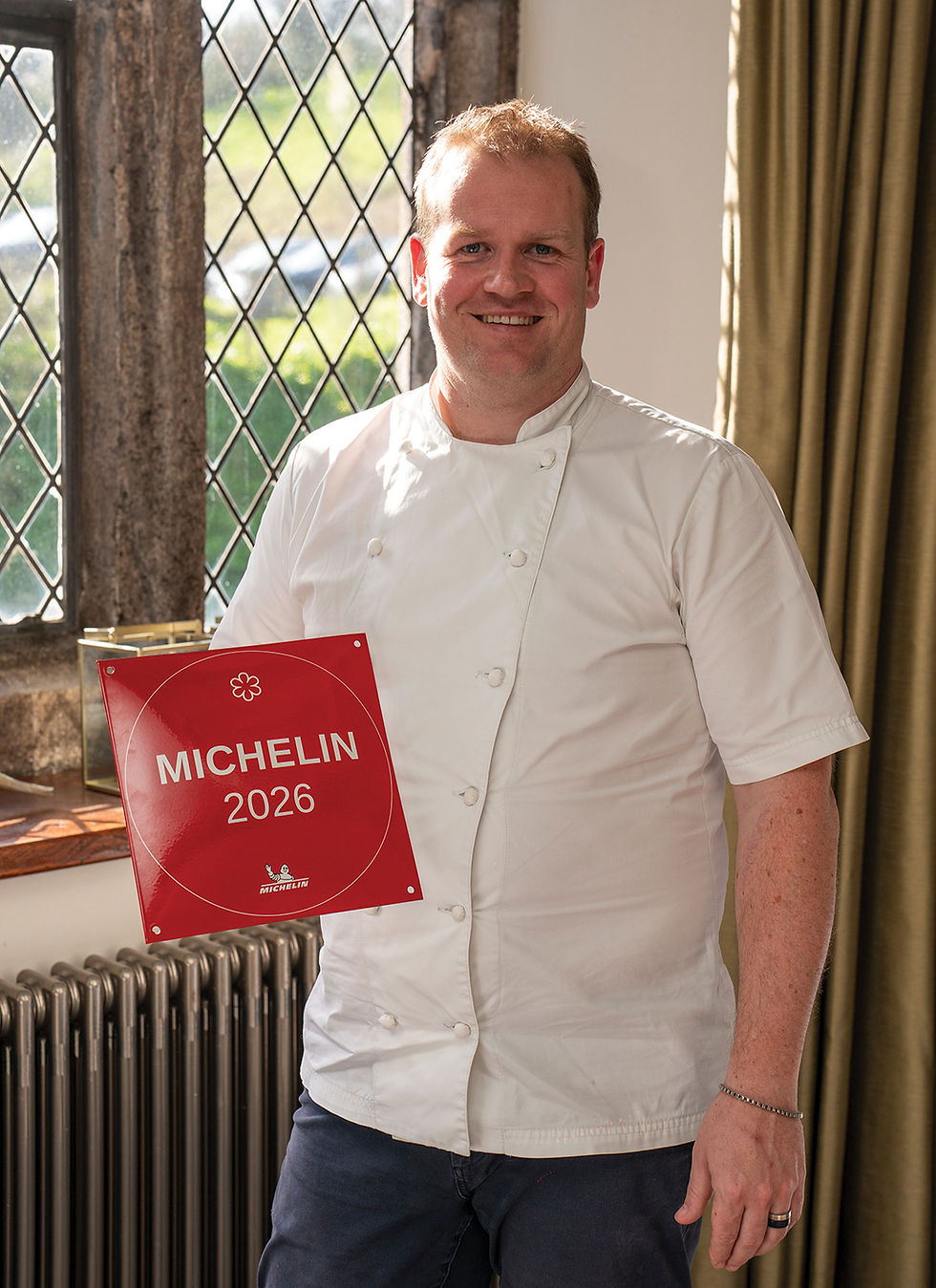
How does the wine programme complement the food offering, and what role does pairing play in shaping the overall dining experience?
The wine pairing is there to complete the experience, elevating the dish, the pace of the meal and the overall sense of being looked after. Pairing can be opinionated; there’s a science to it, but sometimes it’s as simple as tasting it and deciding that it works. We taste as a team and talk through structure and flavour (tannin, aromatics, alcohol), but the ultimate question is always the same: is it delicious with that plate of food?
We aim to introduce guests to a world of wine that they may not know. It’s so diverse. I think most wine drinkers know what they like, but we can help you discover something new.
Looking ahead, how do you see the food offering at Boringdon Hall developing over the next few years, particularly in response to changing guest expectations and wider industry pressures?
The main aim never changes: to be better than yesterday. That means refining what we do, building skills as a team, and staying honest about what guests value: quality, consistency and a sense of care. Of course, we also have ambitious targets, and it’s normal to talk about them: pushing towards five Rosettes and, in time, a second MICHELIN Star. But the way we get there is the day-to-day work, by learning and improving, and maintaining standards moving forward.


